Marketing Automation Starts Simple. Then Growth Happens.
Marketing automation often starts simply.
A form on the website.
A welcome email.
A CRM to store leads.
A meeting booking link to avoid email ping-pong.
At first, it feels manageable.
Then the business grows.
Your leads increase.
Your tools multiply.
Your team gets busier.
Follow-ups start to slip.
Reporting becomes unclear.
And slowly, warm prospects go cold.
That is not a tool problem.
It is a marketing system problem.
The solution is not simply buying more software.
The solution is building a marketing automation system that connects your leads, tools, team, and data into one clear growth process.
In this guide, you will learn what marketing automation really means, what to automate first, which tools can help, and how to build a system that supports scalable growth.
What Marketing Automation Really Means
Marketing automation is not just sending more emails.
It is not just using AI.
And it is definitely not about sending generic messages to everyone.
Marketing automation uses tools, workflows, and customer data to automate repetitive marketing and sales tasks.
But the customer journey still needs to feel relevant and personal.
It can support:
- Lead capture
- CRM updates
- Lead qualification
- Email follow-up
- Lead nurturing
- LinkedIn outreach
- Appointment scheduling
- Internal notifications
- Customer onboarding
- Reporting
- Retention campaigns
The goal is simple.
Deliver the right message to the right person at the right time.
Not because someone remembered to do it manually.
Because your system was built to support the customer journey.
Why Marketing Automation Matters for Growing Businesses
Growth is exciting.
More enquiries.
More opportunities.
More customers.
More momentum.
But growth also creates pressure.
The process that works with 10 leads per month can start breaking at 100 leads per month.
A business may invest in SEO, Google Ads, content, events, partnerships and outreach.
The attention is created.
The lead is captured.
Then the process becomes unclear.
Who follows up?
How fast?
With what message?
Can sales see the source?
Can marketing see whether it became revenue?
This is where opportunities are often lost.
Not because the campaign failed.
Because the follow-up system was weak.
Without a strong automation system:
- Leads are followed up too slowly
- Warm prospects lose interest
- Competitors step in
- Sales lacks context
- CRM data becomes unreliable
- Reporting becomes unclear
Marketing automation helps close the gap between attention and revenue.
When done well, it helps businesses:
✔ Respond faster
✔ Nurture leads more effectively
✔ Improve customer experience
✔ Align marketing and sales
✔ Reduce manual admin
✔ Improve reporting accuracy
✔ Scale with more confidence
What Should Businesses Automate First?
Automation without strategy creates noise.
Before choosing tools, look for the biggest leaks in your current process.
Start with the areas that create the most friction.
1️⃣ Lead Capture and CRM Updates
Every enquiry should enter your system properly.
That could happen through a website form, landing page, lead magnet, demo request, event registration, LinkedIn campaign, paid media campaign or newsletter sign-up.
The key question is simple.
What happens next?
A strong setup makes sure every lead is:
✅ Recorded in the CRM
✅ Tagged with the right source
✅ Assigned to the right person
✅ Added to the right segment
✅ Triggered into the right workflow
No messy spreadsheets.
No lost enquiries.
No guessing.
2️⃣ Follow-Up Emails and Lead Nurturing
Speed matters.
When someone fills in a form, downloads a guide or requests a call, the first response should not depend on memory.
Automated follow-up can:
- Confirm the enquiry
- Send the requested resource
- Share the next step
- Provide a booking link
- Re-engage inactive leads
The best follow-up does not feel automated.
It feels helpful.
But follow-up is only the start.
Not every prospect is ready to buy today.
Some need education.
Some need proof.
Some need internal approval.
Some need time to compare options.
Lead nurturing keeps your business visible while they make that decision.
This can include:
✔ Educational content
✔ Case studies
✔ Customer success stories
✔ Comparison content
✔ Service explainers
✔ Webinar invitations
✔ Helpful guides
✔ Frequently asked questions
The goal is not pressure.
It is trust.
If lead nurturing is your biggest bottleneck, read our related guide: How to Automate Lead Nurturing To Increase Revenue.
3️⃣ Appointment Booking
One of the easiest automation wins is removing friction from booking calls.
Prospects should not need five emails to find a time.
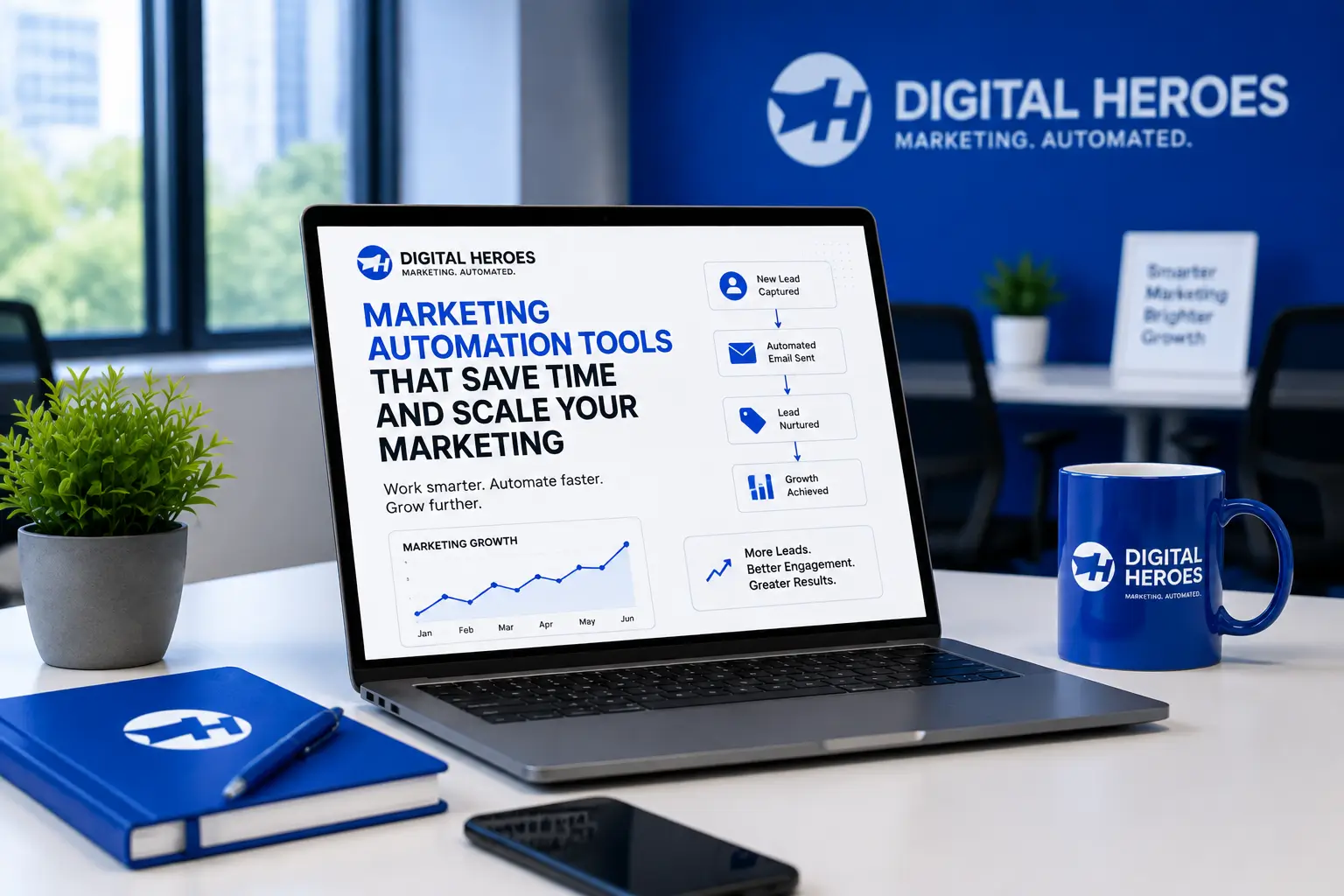
A simple workflow can look like this:
1️⃣ A lead fills out the website form
2️⃣ They select a preferred date and time for the meeting
3️⃣ The meeting is automatically scheduled
4️⃣ The lead and meeting details are added to the CRM
5️⃣ Sales receives the full context before the call
6️⃣ Confirmation emails and reminders are sent automatically
Simple.
But powerful.
4️⃣ Sales Handover and Reporting
Marketing and sales often lose information between systems.
Automation can pass useful details to sales:
✅ Lead source
✅ Form submission
✅ Content downloaded
✅ Campaign attribution
✅ Website activity
✅ Previous interactions
This helps sales act faster.
It also helps them have better conversations.
The prospect feels understood.
Reporting then shows what is working.
Which channels generate leads?
Which campaigns create opportunities?
What is the cost per lead?
Where are prospects dropping off?
What turns into revenue?
Good reporting helps teams stop guessing and start improving.
Useful Marketing Automation Tools
There is no single perfect tool.
The best setup depends on your business model, sales process, team, budget, and growth stage.
That is why the process should come first.
The tool should support the process.
Common tool categories include:
- CRM and marketing automation platforms: GoHighLevel, HubSpot, Clickfunnels, Thrivecart, Infusion Soft, Ontraport, ActiveCampaign, Mail Chimp and ConvertKit.
- Workflow automation tools: Make, Zapier, and N8N.
- Meeting booking tools: Calendly and Microsoft Bookings.
- LinkedIn outreach tools for targeted B2B campaigns, event campaigns, partnership outreach and appointment setting.
- Analytics and reporting tools: GA4, Looker Studio, CRM dashboards, PowerBI, and platform-native reporting tools.
The goal is not to build the biggest tech stack.
The goal is to build the clearest growth system.
Because if you cannot see what works, you cannot improve it properly.
Where AI Fits Into Marketing Automation
AI can make marketing automation more powerful.
It can help with:
✅ Drafting email variations
✅ Personalising messaging
✅ Summarising lead information
✅ Creating audience segments
✅ Analysing campaign patterns
✅ Improving reporting insights
✅ Speeding up content production
But AI does not fix a broken process.
If your CRM is messy, your funnel is unclear and your follow-up is inconsistent, AI may only make the chaos faster.
The system comes first.
AI should support the strategy.
Not replace it.
Mistakes That Kill Marketing Automation
Even great tools fail when the strategy is weak.
Avoid these common mistakes:
❌ Buying tools before mapping the customer journey
❌ Automating without a clear business goal
❌ Making communication feel robotic
❌ Adding too many tools too quickly
❌ Ignoring CRM data quality
❌ Forgetting to align marketing and sales
❌ Treating automation as set and forget
Automation should feel helpful.
Not cold.
Not generic.
The best systems make prospects feel guided, not processed.
How to Build a Simple Marketing Automation System
You do not need to automate everything on day one.
Start simple.
1️⃣ Map the customer journey
Where do leads come from?
What happens next?
Who follows up?
What should be measured?
2️⃣ Identify the biggest leak
Do not start with everything.
Start with the issue creating the most friction.
3️⃣ Choose the right tools
Pick the tool based on the process.
Not the other way around.
4️⃣ Build the first workflow
Keep it practical.
For example:
- Form submitted
- Contact created in CRM
- Lead source added
- Confirmation email sent
- Sales notified
- Booking link shared
- Follow-up reminder created
5️⃣ Review, improve and scale
Marketing automation is not set and forget.
Track what matters:
- Open rates
- Click-through rates
- Booked calls
- Lead quality
- Conversion rates
- Sales feedback
- Funnel drop-offs
Small improvements compound over time.
Final Thoughts: Automation Turns Complexity Into Growth
Most founders and business owners do not wake up excited about CRM fields, workflow builders or reporting dashboards.
They want more customers.
More predictable growth.
More time to focus on strategy instead of repetitive admin.
That is what the right marketing automation system can support.
The goal is not to automate everything.
The goal is to automate the right things.
At the right time.
For the right business outcome.
That is how growing businesses move from tool overwhelm to scalable growth.
Ready to Build a Marketing Automation System That Supports Growth?
At Digital Heroes, we help growing businesses turn marketing complexity into clarity.
We do not just add tools.
We help you understand where your current marketing system is leaking.
We help you decide what should be automated first.
And we help you choose the tools that fit your business goals.
From CRM and lead nurturing to LinkedIn outreach, appointment setting, reporting and AI-powered workflows, we help build systems that support real business growth.
Ready to grow smarter with marketing automation?
Book a free discovery call with the Digital Heroes team and find out how we can help your business grow.
Authors: Ivo & Rajni
Author: Ivo Paschold
Ivo Paschold is the Founder and Managing Director of Digital Heroes, with nearly two decades in digital marketing. From launching his first e-commerce business in 2007 to building global remote agency Digital Heroes, he helps brands grow through clear digital marketing strategy, planning, and service delivery as promised.

Author: Rajni
Rajni is a Senior Marketing Automation and CRM Specialist with eight years of experience in digital marketing. She focuses on email marketing, lead nurturing, and marketing automation, building scalable customer journeys and CRM systems that improve conversion rates and customer retention.

Frequently Asked Questions
1. What is marketing automation?
It is the use of tools, workflows, and customer data to automate repetitive marketing and sales tasks while keeping the customer journey relevant and personal. In practice it can cover lead capture, CRM updates, qualification, follow-up, nurturing, outreach, appointment scheduling, onboarding, reporting, and retention. The point is delivering the right message at the right time by design rather than by memory.
2. What should a growing business automate first?
Start with the biggest leak in your current process rather than automating everything at once. For most businesses that means lead capture and CRM updates first, so every enquiry is recorded, tagged with its source, assigned to the right person, and triggered into the right workflow. Follow-up emails, nurturing, appointment booking, and sales handover usually come next.
3. Which marketing automation tools should you use?
There is no single perfect tool, because the right setup depends on your business model, sales process, team, budget, and growth stage. Common categories include CRM and automation platforms such as GoHighLevel, HubSpot, or ActiveCampaign, workflow tools such as Make, Zapier, or n8n, booking tools such as Calendly or Microsoft Bookings, and reporting through GA4, Looker Studio, or CRM dashboards. Choose the process first, then pick the tool that supports it.
4. Where does AI fit into marketing automation?
AI is useful for drafting email variations, personalising messaging, summarising lead information, building segments, spotting campaign patterns, and speeding up content production. What it cannot do is repair a weak process. If your CRM data is messy and your follow-up is inconsistent, AI will simply make that chaos run faster.
5. What are the most common marketing automation mistakes?
Buying tools before mapping the customer journey, automating without a clear business goal, letting communication feel robotic, adding too many tools too quickly, ignoring CRM data quality, failing to align marketing and sales, and treating automation as set-and-forget. Each one turns a growth system into admin overhead. Good automation should make prospects feel guided rather than processed.
AI Quick Answer Block Marketing automation connects your leads, tools, team, and data into one process that captures enquiries, updates the CRM, follows up quickly, nurtures prospects, books meetings, and reports on what converts. Growing businesses should map the customer journey first, fix the biggest leak in the process, then choose tools that fit that process rather than building the largest possible tech stack. AI can strengthen the system through personalisation, segmentation, and faster content, but it cannot replace a clear process underneath.