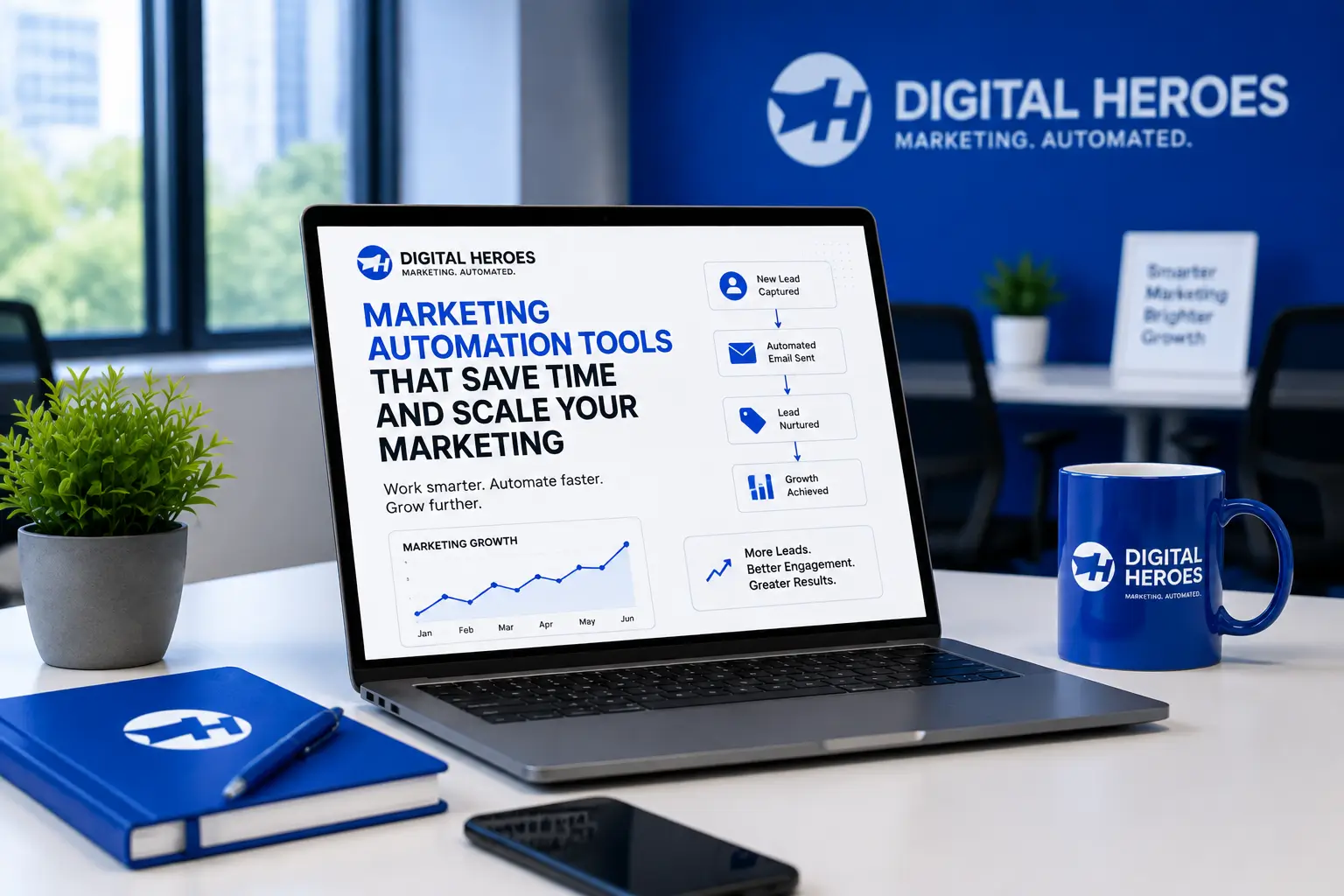
Marketing teams are not short on ideas.
They are short on time.
Every campaign requires attention.
Every lead needs follow-up.
Every channel needs optimisation.
And every customer expects a personalised experience.
Managing all of this manually is no longer realistic.
That is where marketing automation becomes a competitive advantage.
The best marketing automation tools do more than automate repetitive tasks.
They create smarter systems.
They connect marketing activities.
They help teams turn opportunities into measurable results.
Marketing automation brings together:
 Email campaigns
CRM management
Lead nurturing
Customer segmentation
Reporting and analytics
Paid advertising workflows
For agencies, consultants, and growing businesses, automation creates the structure needed to scale without increasing unnecessary workload.
A strong marketing automation system connects your leads, tools, team, and data into one clear growth process.
In this guide, we explore the three marketing automation tools we recommend most often, plus two bonus tools that support and extend them. To help businesses save time, improve efficiency, and build stronger customer journeys.
Why Marketing Automation Matters More Than Ever
Marketing has become more complex.
Customers rarely follow a straight path.
A potential customer may:
• Discover your brand through SEO
• Click a paid advertisement
• Download a resource
• Receive an email
• Speak with your sales team
• Become a customer weeks later
Without automation, managing these touchpoints becomes difficult, especially for growing businesses that don’t yet have a large built-out marketing function.
Marketing automation helps businesses create consistent experiences across every stage of the customer journey.
It allows teams to:
✓ Reduce repetitive manual work
✓ Improve lead follow-up speed
✓ Create personalised communication
✓ Align marketing and sales teams
✓ Scale campaigns more efficiently
The goal is simple.
Spend less time managing tasks.
Spend more time improving strategy.
For more insights into improving your digital performance, explore our digital marketing strategies resources.
What Should You Look For in Marketing Automation Tools?
Not every automation platform is built for every business.
The right solution depends on your goals, workflows, and customer journey.
For growing, remote-friendly businesses, typically somewhere between 10 and 250 employees, past product-market fit, with budget available but no built-out marketing function yet. The right tool needs to work hard without requiring a large team to run it.
Before selecting a marketing automation tool, consider:
✓ CRM integration
✓ Email workflow flexibility
✓ Lead scoring capabilities
✓ Reporting and analytics
✓ Scalability
✓ Integration with existing marketing platforms
The best automation platform should simplify your operations.
Not add more complexity.
Traditional Marketing vs Modern Marketing Automation
| Traditional Marketing Approach | Modern Marketing Automation Approach |
|---|---|
| Manual follow-ups | Automated customer journeys |
| Separate disconnected tools | Integrated marketing systems |
| Generic messaging | Personalised communication |
| Slow reporting processes | Real-time performance insights |
| Reactive campaigns | Proactive engagement |
The difference is efficiency.
Traditional marketing relies heavily on manual execution.
Modern marketing automation creates systems that continuously support growth.
The 3 Best Marketing Automation Tools That Save Time
 Go High Level: The Growth Platform Built for Lean Teams
Go High Level (GHL) is an all-in-one sales and marketing platform built specifically for agencies and growing businesses that need a full toolkit without the enterprise price tag or complexity.
It combines CRM, email and SMS automation, funnel and landing page building, appointment scheduling, and reputation management in one system.
Why Go High Level Saves Time
Go High Level replaces a stack of separate tools with one connected platform, which matters most for teams without a dedicated marketing department.
Key time-saving features include:
Built-in CRM and pipeline management
Multi-channel automation (email, SMS, and voice)
Drag-and-drop funnel and landing page builder
Automated appointment booking and reminders
Two-way conversation inbox across channels
For lean teams, Go High Level condenses what would otherwise require several separate subscriptions into a single, more affordable system.
Best Use Cases
Go High Level is ideal for:
✓ Small and medium businesses without a full marketing team
✓ Agencies managing automation for multiple clients
✓ Businesses that rely on appointments or bookings
✓ Combined SMS and email nurture sequences
✓ Funnel-driven lead generation
For growing businesses that want the power of an all-in-one platform without enterprise complexity or cost, Go High Level is our go-to recommendation.
 HubSpot: The All-in-One Marketing Automation Platform
HubSpot is one of the most recognised marketing automation platforms available.
It combines CRM, email marketing, lead nurturing, analytics, and automation into one connected ecosystem.
This makes it popular among digital agencies and growing businesses.
Why HubSpot Saves Time
HubSpot removes the challenge of managing multiple disconnected platforms.
Everything is organised in one place.
Key time-saving features include:
Centralised CRM management
Automated contact updates
Visual email workflow builder
Lead scoring and segmentation
Behaviour-based follow-ups
For teams managing multiple campaigns, HubSpot reduces manual processes and improves visibility across the customer journey.
Best Use Cases
HubSpot works well for:
✓ Lead nurturing campaigns
✓ Inbound marketing workflows
✓ Sales and marketing alignment
✓ Customer lifecycle tracking
✓ Campaign reporting
For businesses that want a complete marketing ecosystem, HubSpot provides the foundation needed for scalable growth.
 ActiveCampaign: Advanced Email Automation Made Simple
ActiveCampaign is designed for businesses that want powerful email automation without unnecessary complexity.
Its biggest strength is creating personalised customer journeys based on user behaviour.
Why ActiveCampaign Saves Time
Instead of manually sending every campaign, businesses can create automated workflows that respond to customer actions.
Key capabilities include:
Behaviour-based email automation
Dynamic content personalisation
Automated tagging
Audience segmentation
CRM integration
This allows businesses to deliver relevant messages at the right time.
Best Use Cases
ActiveCampaign is ideal for:
✓ Lead nurturing sequences
✓ Customer onboarding
✓ Re-engagement campaigns
✓ Email-focused businesses
✓ Agencies managing multiple customer lists
For businesses focused on relationship building, ActiveCampaign creates personalised communication at scale.
Bonus Tools: Extending Your Marketing Automation Stack
Go High Level, HubSpot, and ActiveCampaign each work well as a central platform on their own. But most growing businesses also rely on other tools. Accounting, project management, ads platforms, spreadsheets, that need to connect into that central system. That’s where these two bonus tools come in.
Zapier: Simple Automation That Connects Your Tools
Zapier is different from a marketing automation platform.
It does not replace your existing tools.
It connects them.
It allows platforms that normally operate separately to work together automatically.
Why Zapier Saves Time
Zapier removes repetitive data transfers between systems. It works well as a lightweight connector on top of Go High Level, HubSpot, or ActiveCampaign.
It can help teams:
Send leads from forms directly into CRM systems
Sync customer information
Automate reporting workflows
Connect SEO, advertising, and email platforms
For smaller teams and agencies, Zapier provides powerful automation without requiring complex development.
Make.com: Visual Automation for More Complex Workflows
Make.com (formerly Integromat) is a visual automation platform that connects your marketing automation tool to the rest of your business systems, with more flexibility than a simple one-step connector.
Why Make.com Saves Time
Where a workflow needs several steps, conditional logic, or data transformation between apps, Make.com handles it visually, without needing a developer.
It can help teams:
Build multi-step workflows across dozens of apps
Transform and enrich data between systems
Automate internal operations alongside marketing workflows
Connect niche or industry-specific tools that don’t have native integrations
For businesses whose automation needs go beyond simple triggers, Make.com adds the flexibility to build more advanced systems on top of Go High Level, HubSpot, or ActiveCampaign.
How Marketing Automation Supports SEO and Paid Advertising
Marketing automation is not only about email campaigns.
When implemented correctly, it strengthens your entire digital marketing ecosystem.
SEO, paid advertising, CRM, and customer communication all become more connected.
Instead of generating leads and leaving them behind, automation helps businesses continue the conversation.
Marketing automation improves:
✓ SEO lead tracking
✓ Paid advertising attribution
✓ Conversion rate optimisation
✓ Customer follow-up processes
✓ Marketing performance reporting
For example:
An SEO campaign may attract thousands of visitors.
But without a proper nurturing system, many potential customers leave without taking action.
Automation helps capture those opportunities.
It keeps leads engaged with timely follow-ups and personalised communication.
Discover how to automate lead nurturing workflows and turn more enquiries into revenue opportunities.
A visitor downloads a guide.
They enter a workflow.
They receive relevant information.
They move closer to becoming a qualified lead.
The same applies to paid advertising.
A Google Ads campaign may generate enquiries.
Automation ensures those enquiries receive timely follow-ups instead of getting lost.
Search is changing.
Businesses now need to optimise for both traditional search engines and AI-driven platforms.
Explore our guide on AI Search Optimisation to understand how brands can improve visibility in the next generation of search.
Common Marketing Automation Mistakes to Avoid
Marketing automation is powerful.
But the technology itself does not guarantee success.
Poor strategy creates poor results.
The biggest mistakes usually happen when businesses automate without understanding their audience, goals, or customer journey.
Avoid these common problems:
 Automating everything without a clear strategy
Creating workflows without understanding customer behaviour
Ignoring CRM integration
Building complicated email sequences that confuse customers
Failing to review performance data
Treating automation as a replacement for marketing strategy
Automation should support human decision-making.
It should make marketing smarter.
Not remove the thinking behind it.
How to Choose the Right Marketing Automation Tool
There is no single “best” marketing automation platform.
The right choice depends on your business needs.
A small business will have different requirements from a global enterprise.
Before choosing a tool, ask:
How complex is your customer journey?
Do you need CRM integration?
Are you focused on B2B or B2C marketing?
 How large is your marketing team?
 What level of reporting and analytics do you require?
Here is a simple guide:
| Business Need | Recommended Automation Approach |
|---|---|
| Lean teams needing CRM, funnels, and communication in one platform | Go High Level |
| Businesses wanting an all-in-one marketing ecosystem | HubSpot |
| Businesses focused on advanced email personalisation | ActiveCampaign |
| Connecting existing tools with simple, single-step automation | Zapier |
| Connecting tools with more complex, multi-step workflows | Make.com |
The goal is not choosing the most expensive platform.
The goal is choosing the platform that creates the most efficiency for your team.
Marketing Automation Best Practices
A successful automation strategy requires more than choosing software.
It requires the right foundation.
Follow these principles:
Understand your customer journey first
Create clear goals for every workflow
Personalise communication where possible
Keep workflows simple and easy to manage
Regularly analyse performance data
Continue improving based on customer behaviour
The best automation systems are not created once.
They evolve over time.
Final Thoughts: Marketing Automation Is a Growth Advantage
Time is one of the most valuable resources in marketing.
The best marketing automation tools do not simply save hours.
They create better systems.
They improve consistency.
They help teams scale.
When implemented correctly, automation allows businesses to:
✓ Nurture leads without constant manual effort
✓ Connect SEO, paid advertising, email, and CRM data
✓ Improve customer experiences
✓ Reduce operational workload
✓ Focus more time on strategy and growth
Marketing automation is no longer just a productivity tool.
It is part of a wider scalable marketing growth system that helps businesses connect strategy, technology, and customer experience.
It is the foundation for sustainable digital marketing performance.
Businesses that build smarter systems today will be better positioned for tomorrow.
Do you want to discuss marketing automation potential for your business?
Schedule a free 30-minutes discovery call here.
Authors: Ivo & Rajni
Author: Ivo Paschold
Ivo Paschold is the Founder & Managing Director of Digital Heroes, with nearly two decades in digital marketing. From launching his first e-commerce business in 2007 to building global remote agency Digital Heroes, he helps brands grow through clear digital marketing strategy, planning, and service delivery as promised.

Author: Rajni
Rajni is a Senior Marketing Automation and CRM Specialist with eight years of experience in digital marketing. She focuses on email marketing, lead nurturing, and marketing automation, building scalable customer journeys and CRM systems that improve conversion rates and customer retention.

Frequently Asked Questions
What are marketing automation tools used for?
Marketing automation tools help businesses automate tasks like email campaigns, lead nurturing, CRM updates, and reporting to save time and improve efficiency.
Which marketing automation tools are best for businesses?
The best tools depend on business needs. Our top three picks are Go High Level, HubSpot, and ActiveCampaign, with Zapier and Make.com as bonus tools to connect them with the rest of your stack.
How does marketing automation help SEO and paid advertising?
Marketing automation connects marketing data with CRM systems, improves lead follow-ups, and helps businesses track conversions from SEO and paid campaigns.
Is marketing automation useful for small businesses?
Yes. Marketing automation helps small and medium businesses reduce manual work, manage leads more effectively, and create consistent customer experiences – often without needing a large, dedicated marketing team.
Can marketing automation improve lead generation?
Yes. It helps businesses capture, organise, and nurture leads automatically, improving engagement and conversion opportunities.
AI Quick Answer Block
Marketing automation tools help businesses save time by automating repetitive marketing tasks, improving lead nurturing, connecting CRM systems, and creating personalised customer journeys. For small and medium, growth-stage businesses, the top three marketing automation platforms are Go High Level, HubSpot, and ActiveCampaign, each supporting different business needs. Go High Level combines CRM, funnels, and multi-channel communication for lean teams without a full marketing department, HubSpot provides an all-in-one marketing ecosystem, and ActiveCampaign focuses on personalised email automation. Zapier and Make.com serve as bonus tools that connect these platforms to the rest of a business’s tech stack, with Zapier suited to simple, single-step automations and Make.com suited to more complex, multi-step workflows. When combined with SEO, paid advertising, CRM, and analytics systems, marketing automation helps growing businesses improve efficiency, scale campaigns, and create stronger customer experiences.